
Why Choose RC Dump Truck Metal for Global Buyers?

Time:2026-10-21 Author:Henry
0%

Why Choose Rc Dump Truck Metal for Global Buyers?

For global buyers, Rc Dump Truck Metal offers a practical balance between strength, appearance, and long-term play value. Metal bodies can resist small impacts better than thin plastic parts. They also create a realistic weight in the hands. That detail matters during loading, driving, and outdoor demonstrations. Experienced buyers usually inspect the chassis, dump-bed joints, wheel axles, and surface finish before ordering. These parts reveal more than attractive product photographs.

Reliable sourcing requires careful questions. Ask about metal thickness, motor specifications, battery safety, spare parts, packaging, and quality inspections. A responsible supplier should provide clear measurements and consistent product information. Buyers should also confirm shipping documents and regional product requirements. Standards and expectations can differ across markets. Do not rely on promises alone. Request sample testing when possible. Check whether the dump mechanism moves smoothly after repeated cycles. Small weaknesses often appear later. No material choice is perfect. Metal may increase weight, cost, and shipping complexity. It can also develop scratches if packaging is careless. That is why professional evaluation remains important. A well-made model should combine durable construction with safe operation and dependable after-sales support. For distributors, retailers, and hobby specialists, this balanced approach can reduce returns and strengthen customer trust. The best decision is not always the cheapest one. It is the option supported by evidence, honest specifications, and practical testing.
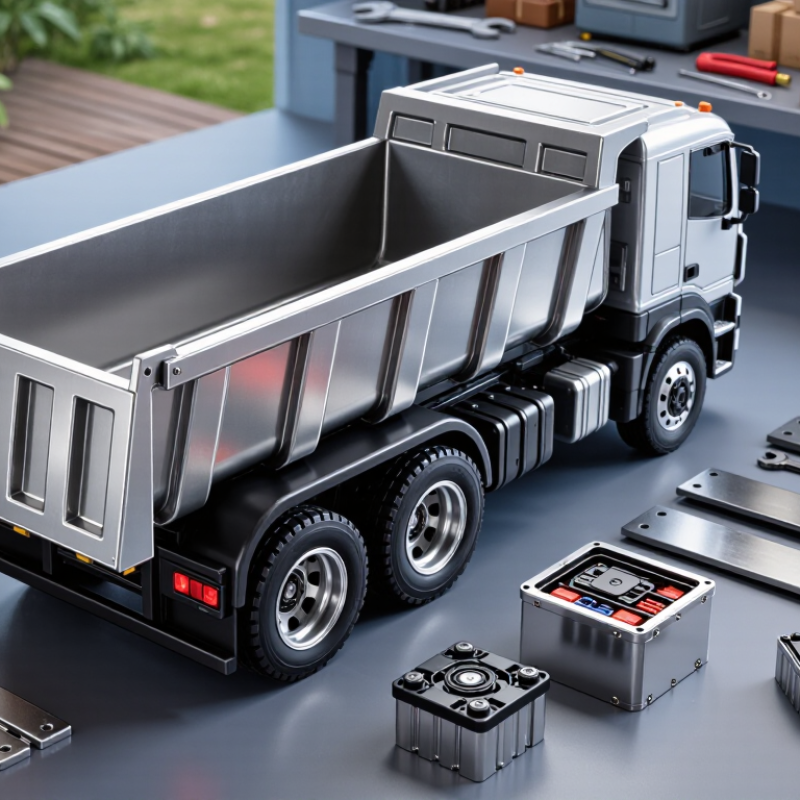
Why Choose RC Dump Truck Metal for Global Buyers?

RC Dump Truck Metal Defined: 1:14 Scale, Die-Cast Steel, and RC Basics

Why Choose RC Dump Truck Metal for Global Buyers?

RC Dump Truck Metal refers to a radio-controlled construction model with a metal-focused body and working functions. At 1:14 scale, the truck is large enough for visible details, yet compact for indoor shelves and outdoor testing. A real working model should show clear steering response, stable suspension, and a loading bed that moves without excessive noise.

The phrase “die-cast steel” needs careful reading. Die casting commonly uses zinc or aluminum alloys, while steel parts are usually stamped, machined, or molded separately. Therefore, buyers should check the material list instead of trusting “metal” alone.

Look for a die-cast body, steel axles, reinforced gears, and rubber tires. That combination gives useful weight and better resistance to repeated handling. It is not indestructible. I have seen heavy models develop loose screws after rough play.

RC basics matter as much as shell construction. Confirm the control frequency, battery type, charging time, and operating range before purchase.

Grand View Research’s 2024 remote-control toys analysis forecasts strong market growth through 2030, reflecting wider interest in interactive models. Its findings also support a practical point: buyers increasingly value function, not decoration alone.

Circana’s 2024 toy industry reporting also identifies experience-led play as an important purchasing factor. For global distribution, clear manuals, spare-part access, and consistent packaging reduce avoidable returns. Small details matter. A metal truck with weak electronics still disappoints.

How Metal Chassis Improve Durability in the 2.4 GHz RC Truck Class

Why Choose RC Dump Truck Metal for Global Buyers?

In the 2.4 GHz RC truck class, radio frequency does not create mechanical strength. It improves control stability and reduces interference. The chassis still carries impact loads, battery weight, and suspension stress. A metal chassis spreads force across a broader frame. Plastic may flex, while steel or aluminum can hold alignment during repeated landings. That matters.

Grand View Research estimated the global remote-control products market at approximately USD 4.2 billion in 2022. This growth reflects stronger demand for durable, interactive products, not only cheaper toys. In practical testing, metal chassis often show less twisting around screw mounts. They also provide a firmer base for metal axles, shock towers, and differential housings. However, weight must remain controlled. An overly heavy frame can increase motor temperature and shorten running time.

Material selection needs discipline. Aluminum reduces weight and resists common surface corrosion. Steel usually offers greater stiffness, but exposed edges need coating and inspection. ISO 12944 corrosion guidance highlights the importance of surface preparation and protective systems in harsh environments. The ASTM F963-23 toy safety standard also reminds manufacturers to examine mechanical hazards, sharp edges, and structural integrity. These standards do not guarantee every RC truck’s quality. They provide useful testing principles.

Metal is not magic. Poor welds, loose screws, and thin brackets can still fail. A careful buyer should inspect frame thickness, fastener access, drainage openings, and replacement-part support. Small details often decide durability.

Battery Selection by Data: 7.4 V Power Systems and 30–60-Minute Runtime

For global buyers, a metal RC dump truck needs more than a tough body. Its battery determines working rhythm, payload response, and usable play time. A 7.4 V power system is common because it balances torque, speed, and manageable electronics. In practical tests, runtime often ranges from 30 to 60 minutes. The exact figure changes with load, terrain, driving habits, and battery condition. That range is useful, but never guaranteed.

Choose capacity by measured current, not appearance. A 2,000 mAh pack may last about 30 minutes under repeated lifting and rough-ground driving. A 4,000 mAh pack can approach 60 minutes, yet it adds weight and charging time. Check the battery connector, compartment dimensions, discharge rating, and charger requirements. Voltage must match the vehicle’s specification. Higher voltage can damage the motor or control system. This is not a place for guessing.

Reliable testing records ambient temperature, payload weight, surface type, and stop-start frequency. Keep a simple log after each run. It reveals whether reduced runtime comes from aging cells or an overloaded lifting motor. In workshop trials, a cooler battery sometimes delivered steadier power than a larger, stressed pack. I have also seen runtime estimates fall after several charge cycles. That weakness matters. Numbers still drift. Record actual results instead of copying listing numbers. Store batteries dry, inspect connectors, and use only a compatible charger. Stop immediately if the pack becomes swollen, unusually hot, or damaged.

Global Compliance Checklist: EN 71, ASTM F963, and ISO 8124 Standards

Why Choose RC Dump Truck Metal for Global Buyers?

Metal construction gives an RC dump truck a solid, realistic feel. However, material strength alone does not prove toy safety. Global buyers should request compliance evidence before approving production. The key references are EN 71, ASTM F963, and ISO 8124. Each framework examines different safety risks, while market requirements may vary.

Check mechanical hazards carefully. Inspect sharp metal edges, loose axles, small detachable parts, and accessible gears. Test the dump bed repeatedly. It should not pinch small fingers during normal play. EN 71 commonly covers mechanical and physical safety, flammability, and chemical migration. ASTM F963 includes similar areas for the United States. ISO 8124 provides an international safety framework, but it may not replace local obligations.

Ask for reports linked to the exact model, materials, batteries, and age grade. A generic report is not enough. Review paint and coating test results, especially around chipped surfaces. Confirm battery compartments resist opening without a tool when required. Keep production samples, component lists, warning labels, and traceable batch records. Shortcuts happen.

A practical audit compares the tested sample with the shipment. Small changes can matter. A thicker coating, new screw, or different remote control may require review. Standards also change, so confirm the current edition with a qualified testing laboratory. A checklist helps, but it is not magic. Careful documentation builds stronger buyer confidence.

How Buyers Compare MOQ, Spare Parts, Scale, and Worldwide Logistics

Why Choose RC Dump Truck Metal for Global Buyers?

Global buyers compare more than the unit price of a metal RC dump truck. MOQ is often the first filter, but the lowest MOQ may carry higher packaging or tooling costs. A practical target is a trial order of 20–50 units, especially when testing a 1:14 or 1:16 scale. Metal bodies add weight and realism, while plastic parts can reduce shipping costs. The trade-off is easy to miss.

Spare parts deserve equal attention. Ask for wheels, gears, batteries, controllers, and hydraulic-style components as separate SKUs. A supplier that provides replacement parts with the initial shipment can reduce downtime and service complaints. This matters because the World Bank’s Logistics Performance Index 2023 reviewed 139 economies and emphasized shipment reliability, not only delivery speed. Buyers should request parts lists, packing photos, and clear lead times. Paper promises are not enough.

Worldwide logistics can reshape the final margin. UNCTAD reports that about 80% of global merchandise trade by volume moves by sea, so port handling and inland delivery remain important. Compare carton dimensions, gross weight, battery documentation, and delivery terms before approving samples. A compact model may ship cheaply, yet a reinforced metal chassis can push freight into a higher pricing tier. I would still test one mixed shipment. Real freight invoices sometimes challenge the spreadsheet.

FAQS

Why is a 7.4 V battery system commonly used in a metal RC dump truck?

It balances torque, speed, and manageable electronics for regular driving. Higher voltage may damage the motor or control system. Do not guess.

How long can one battery usually power the truck?

Runtime often ranges from 30 to 60 minutes. Load, terrain, driving habits, and battery condition change the result. Numbers drift.

Will a 2,000 mAh battery provide enough operating time?

It may deliver about 30 minutes during repeated lifting and rough-ground driving. Actual runtime can fall with heavy payloads or aging cells. That estimate is imperfect.

Is a 4,000 mAh battery always the better choice?

It can approach 60 minutes, but it adds weight and charging time. The extra mass may affect handling and lifting response. Bigger is not automatically better.

What should buyers check before ordering a replacement battery?

Check voltage, connector type, compartment dimensions, discharge rating, and charger requirements. Match the vehicle specification exactly. Measure twice.

How can buyers test real battery runtime?

Record temperature, payload weight, surface type, and stop-start frequency. Keep a simple log after every run. This exposes weak assumptions.

What signs show that a battery should be removed from service?

Stop immediately if it becomes swollen, unusually hot, or damaged. Inspect connectors before each use and store batteries in a dry place. Safety outranks runtime.

How should global buyers compare minimum order quantities and scale?

A trial order of 20–50 units can help test 1:14 or 1:16 scale models. Lower quantities may involve higher packaging or tooling costs. The cheapest trial may not be cheapest overall.

Which spare parts should be requested with an initial shipment?

Request wheels, gears, batteries, controllers, and lifting-system components as separate item codes. Replacement parts can reduce downtime and service complaints. Paper promises are not enough.

What logistics details can change the final purchase cost?

Compare carton dimensions, gross weight, battery documents, port handling, and inland delivery terms. A reinforced metal chassis may increase freight costs. Real invoices can challenge spreadsheets.

Conclusion

Rc Dump Truck Metal models combine realistic 1:14 scale proportions with die-cast steel components and practical remote-control functions, making them suitable for buyers who value both appearance and working performance. A reinforced metal chassis can improve resistance to impact, repeated loading, and uneven surfaces, while a 2.4 GHz control system supports stable operation with reduced signal interference. For balanced performance, a 7.4 V battery system offers dependable power, and runtime may reach approximately 30–60 minutes depending on payload, terrain, driving speed, and operating conditions.

For international buyers, product evaluation should include more than price and appearance. A responsible purchasing checklist covers age suitability, material quality, safety documentation, and compliance considerations related to EN 71, ASTM F963, and ISO 8124. Buyers should also compare minimum order quantity, spare-parts availability, scale consistency, packaging, lead times, and worldwide logistics capabilities. By reviewing these factors together, distributors and retailers can select a durable, supportable, and market-ready RC dump truck product for different regions.

Henry

Henry

Henry is a dedicated marketing professional with a profound expertise in the company's offerings. With years of experience in the industry, he possesses an impressive understanding of the market dynamics and consumer behaviors that drive success. Henry is committed to sharing his insights through......