
A Parabolic Leaf Spring can reduce mass while supporting controlled axle movement, but its performance depends on more than the spring profile. Global buyers must match capacity, dimensions, material, and duty cycle to the vehicle. A polished sample is not enough. Ask for load-deflection curves, fatigue-test conditions, material traceability, and dimensional inspection records.
OICA’s 2023 production report recorded about 93.5 million motor vehicles produced worldwide. That figure signals a broad vehicle market, not demand for any particular spring type. The IEA’s Global EV Outlook 2024 estimated 14 million electric-car sales in 2023, around 18% of global car sales. Changing vehicle designs make verified load data especially important; sales totals alone cannot predict spring specifications. Suspension author John C. Dixon’s published engineering work offers a useful principle, paraphrased here: evaluate a spring within the complete suspension system, not in isolation.
For procurement teams, the practical checks are clear: confirm eye-to-eye length, arch height, bushing details, rated load, and test documentation. Compare suppliers on consistent specifications, not price per unit alone. Request samples from the intended production process, then inspect them under agreed criteria. Even good paperwork has limits. A test result may not reflect rough roads, uneven loading, or years of corrosion exposure. These seven buying tips help global buyers ask sharper questions, reduce avoidable mismatches, and recognize where supplier claims still need verification.
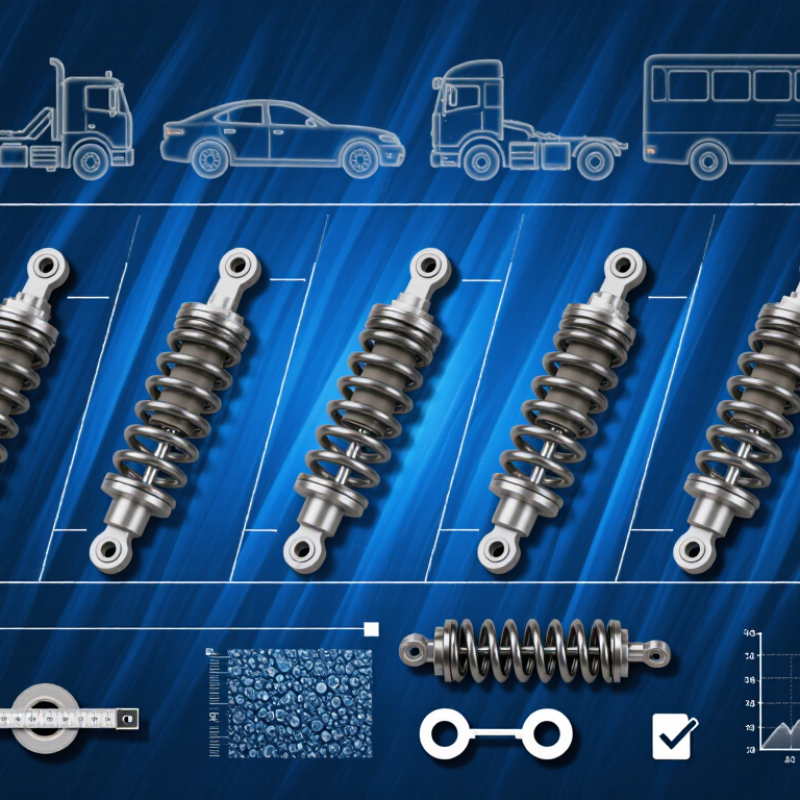
A parabolic leaf spring uses leaves that are thicker near the center and gradually thinner toward the ends. This tapered profile can reduce weight and allow more flexible movement than a stack of leaves with uniform thickness. Fewer leaves do not automatically mean a better match. Spring rate, axle load, and available suspension travel still matter.
Start with the vehicle’s actual requirements, not only its model name. Record the axle load, gross vehicle weight, intended cargo, and typical road conditions. Measure the spring’s length, width, arch height, eye diameter, and center-bolt position. Check bushing type and shackle clearance, too. A small mismatch can change ride height or prevent proper installation. Details matter.
Consider how the vehicle works on an ordinary day. A delivery truck carrying uneven loads needs different support from a lightly loaded utility vehicle. Ask the supplier for load-deflection data and confirm the stated rating applies to your axle configuration. If possible, compare the proposed spring with the original part and inspect its dimensions before ordering. In my experience, catalog descriptions can leave out useful details, so verify them in writing. Even careful checks have limits; a real fitment trial may reveal issues that drawings miss.
For a uniform rectangular beam with the same material, width, and span, bending stiffness is proportional to thickness cubed. This idealized relationship helps illustrate why thickness matters when comparing spring designs; actual parabolic leaf springs also depend on their taper, geometry, material, and vehicle requirements.
Match the spring to the axle’s actual working load, not just the vehicle’s maximum rating. Include passengers, cargo, body equipment, and any weight added behind the axle. The EPA’s 2023 Automotive Trends Report puts average new light-duty vehicle weight at 4,329 pounds for model year 2022. That figure is useful context, not a spring-design target: individual axle loads vary widely. Check spring length, width, eye type, center-bolt position, and installed arch against the vehicle and existing mount points.
Tips: Weigh each axle under realistic operating conditions. Confirm whether the load is usually empty, full, or uneven. Small details matter. A spring that fits the hangers may still produce the wrong ride height or load response.
Also consider road surfaces, temperature, moisture, and duty cycle. Rough routes and frequent full-load trips can increase fatigue demands; coastal or wet environments can accelerate corrosion. SAE J788 describes recommended automotive leaf-spring test procedures, which buyers can use when discussing fatigue and load validation with suppliers. Ask for test conditions and results, not just a rated capacity. I would still verify fitment on the actual vehicle; catalog dimensions can miss worn bushings or modified brackets.
Parabolic leaf springs differ in more than shape. Compare the steel grade, thickness, and heat-treatment method before judging price. A spring made from suitable spring steel should handle repeated loading without losing its intended camber too quickly. Ask how hardness is checked across the finished leaf, not just on a sample coupon. Small differences matter.
Manufacturing processes affect service life. Look for controlled forming, heat treatment, shot peening, and surface protection. Ask suppliers for process records and test results tied to the production batch. A load test can reveal deflection under a specified force, while dimensional checks confirm arch, width, and hole position. Coating thickness matters in wet or salty environments. A polished sample is not proof of consistent production.
Tips: Compare like with like. Share the vehicle load, operating conditions, and target dimensions with each supplier. Request material certificates, inspection records, and test methods, then check that the reported values match your specification. Quality standards vary by market and application, so do not rely on a certificate alone. It is easy to overlook this. Ask about traceability and rejection criteria, too; paperwork may look complete while leaving those details unclear.
7 Parabolic Leaf Spring Buying Tips for Global Buyers
Verify a supplier’s capability on the shop floor, not only in a polished presentation. Check press capacity, heat-treatment controls, inspection equipment, and operator training. Ask how the supplier monitors thickness, camber, and eye dimensions across production lots. Capability figures are useful only when the process is stable and the measurement method is clear. Request control plans and recent records. Small details matter.
Testing should match the spring’s intended load and service conditions. Review fatigue-test methods, load-deflection results, hardness readings, and dimensional reports. Confirm that test samples represent the production batch, not a specially prepared piece. MHI’s 2023 Annual Industry Report found that 87% of surveyed supply-chain professionals expected technology investment to increase. That trend supports better digital records, but software alone does not prove product quality.
Traceability must connect the steel heat number to the finished spring, including forming, heat treatment, shot peening, coating, and final inspection. Ask for a sample record and follow one lot through every stage. Can the supplier link a failed test to the affected batch quickly? Records matter. A spreadsheet may look complete while the trail stops at coating; that gap deserves a direct, uncomfortable question. Keep approved samples, test reports, and change records tied to the same lot identifiers.
| Buying Tip | What to Verify | Evidence to Request | Practical Check |
|---|---|---|---|
| 01 · Confirm design capability | Check that the supplier can review the vehicle application, load requirements, spring geometry, mounting points, and the drawing revision before quoting. | Request a controlled drawing, technical data sheet, material specification, and a written list of assumptions or deviations. | Compare eye dimensions, center-to-center length, camber, thickness profile, width, and hole or bushing details against the approved drawing. |
| 02 · Assess manufacturing controls | Review control of steel receipt, forming, heat treatment, surface finishing, assembly, and final inspection. Confirm which processes are performed in-house and which are subcontracted. | Request a process flow, inspection plan, equipment list, and relevant quality-system certification scope. Verify certificate validity and site coverage with the issuing body where possible. | Ask how process parameters are recorded and how nonconforming material is identified, segregated, and dispositioned. |
| 03 · Verify material and heat-treatment results | Confirm the steel grade and required mechanical properties against the agreed specification. Heat treatment should be controlled to meet the specified hardness and performance requirements. | Request material test certificates linked to the steel heat or lot, plus heat-treatment records and hardness results for the production batch. | Where specified, verify tensile properties using an agreed method such as ISO 6892-1 and hardness using an agreed method such as ISO 6508-1. Acceptance limits must come from the drawing or purchase specification. |
| 04 · Agree on fatigue and load testing | Define the test fixture, loading conditions, cycle count, inspection intervals, and pass/fail criteria before production approval. Test conditions should represent the intended application and agreed specification. | Request the approved test protocol, calibrated equipment records, test reports, sample identification, and documented results for any required durability testing. | Do not rely on an unspecified “fatigue tested” statement. Confirm the sample configuration and test conditions match the agreed engineering requirements. |
| 05 · Check dimensions and appearance | Review the supplier’s method for checking critical dimensions, free camber, alignment, surface defects, and assembly features on finished springs. | Request a first-article inspection report and a batch inspection report with actual measurements, instrument identification, and acceptance criteria. | Ensure measurement results are taken using suitable calibrated instruments and that inspection frequency is stated in the control plan. |
| 06 · Review corrosion protection | Confirm the coating or surface treatment, coverage areas, masking requirements, and any restrictions on coating in contact or clamping zones. | Request the coating specification, process records, and test results required by the purchase specification. If salt-spray testing is specified, agree on the method and acceptance criteria in advance. | ISO 9227 describes salt-spray test methods; it does not by itself define product acceptance limits. Set the required test duration and evaluation criteria in the order documents. |
| 07 · Secure traceability and shipment control | Confirm that each shipment can be traced to its production batch, steel heat or lot, inspection records, and any approved process changes. | Request a sample certificate of conformity, batch coding format, packing list, and procedure for handling complaints, recalls, and change notifications. | Check that labels on products or packaging match the shipment documents and agreed lot codes. Define packaging, corrosion protection, and export documentation requirements in the purchase order. |
Purchasing note: Use the approved drawing and purchase specification as the acceptance basis. Test methods and standards should be agreed with the supplier and matched to the product, application, and destination-market requirements.
A low unit price can hide expensive freight, export packing, insurance, and destination handling. Ask for a landed-cost breakdown using the shipment’s actual weight and dimensions.
UNCTAD’s Review of Maritime Transport 2024 notes that shipping carries over 80% of world trade by volume, so even small freight changes can affect budgets. OECD analysis estimated that fully implementing trade-facilitation measures could reduce trade costs by 14.3% on average. That is a broad estimate, not a leaf-spring forecast, but it shows why clear customs paperwork matters.
Request commercial invoice details, packing lists, and product specifications before production. Check that the declared description and classification match the goods. Small details matter.
Compare delivery terms, transit-time estimates, and who handles customs clearance. Ask whether the quote includes port charges, duties, and final delivery; these are easy to overlook.
I still find this part surprisingly easy to underestimate.
For after-sales support, get warranty coverage, claim evidence requirements, response times, and replacement-part arrangements in writing. A cracked spring photograph, batch number, and installation record can speed up a claim.
Confirm how technical questions will be handled across time zones, and whether support continues after delivery. A cheap offer with vague answers may cost more later.
Ask for a sample document set and a named service contact before placing a large order.
Compare steel grade, thickness, heat treatment, and target dimensions. Price alone can hide important differences.
Controlled forming, heat treatment, shot peening, and surface protection can all matter. Ask for process records.
Review load-deflection results, hardness readings, and dimensional checks for arch, width, and hole position. Check the test methods, too.
No. Ask for material certificates, inspection records, traceability details, and rejection criteria. Paperwork can leave gaps.
Check press capacity, heat-treatment controls, inspection equipment, and operator training. Ask for recent production records.
Yes. Confirm that samples represent the actual batch, not a specially prepared piece. Small distinction, big consequence.
Ask about coating thickness, especially for wet or salty operating conditions. A polished sample proves little.
Follow a sample lot from steel heat number through forming, heat treatment, peening, coating, and final inspection. Records should connect each stage. The trail can still break.
Choosing the right Parabolic Leaf Spring begins with understanding its tapered-leaf design and the vehicle’s intended use. Buyers should confirm that spring capacity, dimensions, mounting points, and axle configuration match the vehicle, while accounting for payload, road conditions, climate, and expected service demands. Comparing material grades, heat treatment, forming methods, and corrosion protection can help assess durability, but specifications should also be supported by consistent manufacturing controls and recognized quality standards.
Before placing an order, evaluate the supplier’s production capability, inspection procedures, test results, and ability to trace products by batch or shipment. Compare quotations by considering more than unit price: packaging, lead time, freight, customs documentation, and potential duties can affect the total landed cost. Clear warranty terms, access to technical guidance, replacement-part availability, and responsive after-sales support can further reduce purchasing risk and help ensure the springs perform reliably throughout their service life.
