
Buying a haul unit across borders is not simply a price comparison. Payload, road conditions, fuel quality, service access, and import support can change the total cost dramatically. This guide presents 10 Dump Truck Truck buying tips for global buyers who need dependable performance beyond the showroom.
Market evidence supports a careful approach. The 2024 Off-Highway Research outlook shows continued demand for construction equipment, while manufacturers increasingly focus on fuel efficiency, connected maintenance, and lower operating costs. The International Energy Agency also reports that heavy-duty transport remains a major fuel consumer. That makes engine efficiency and idle control practical buying concerns, not marketing phrases.
Mike Woof, a recognised construction-equipment analyst and former managing director of Off-Highway Research, has repeatedly stressed application-based selection. His practical message can be stated clearly: “The right machine depends on the worksite, not the brochure.” Buyers should test that idea with real figures. How many tonnes will the truck carry each cycle? How long is the haul route? What happens during the wet season?
A low purchase price may look attractive beside a quarry entrance. It may look different after twelve months of tire wear, downtime, and delayed parts. Sometimes, buyers focus too heavily on horsepower. That is a mistake worth reconsidering. We will examine payload accuracy, drivetrain choices, hydraulic systems, safety equipment, emissions compliance, warranty terms, telematics, resale value, and local technical support. These details create a clearer ownership picture, although no checklist can replace an inspection and a properly measured operating trial.
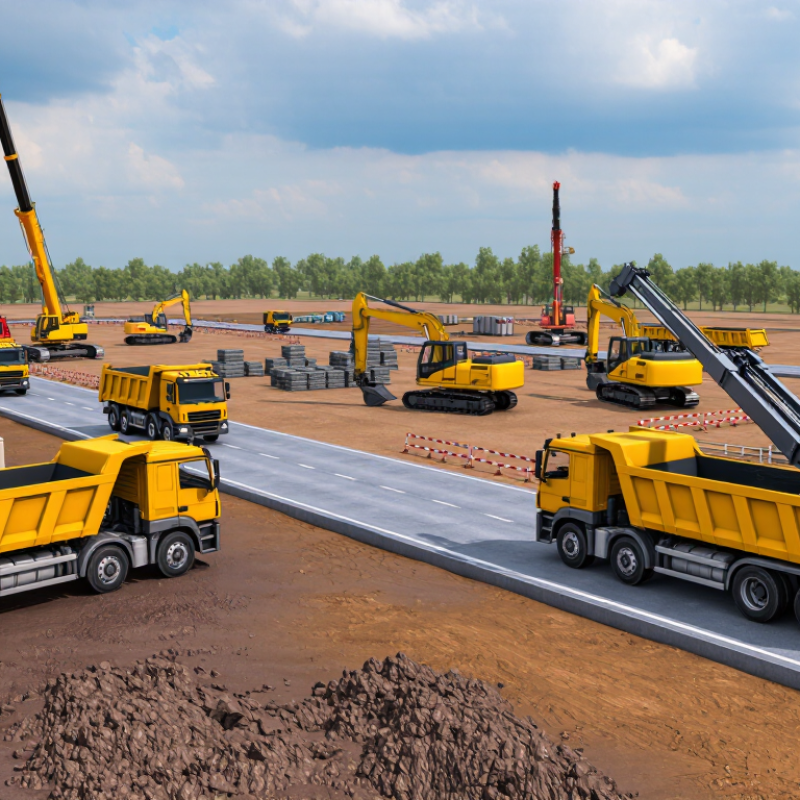
Before choosing a dump truck, define the work in measurable terms. Identify the payload, material density, haul distance, road surface, and daily cycle count. A truck carrying wet clay faces different demands than one moving crushed stone. Do not guess. Weigh typical loads and record the steepest grade. That detail matters.
Operating conditions can change the buying decision quickly. Check the loading height, turning radius, dumping clearance, and ground pressure at the site. In tropical regions, heat and heavy rain may test cooling systems, traction, and corrosion protection. In cold areas, starting performance and hydraulic response deserve careful attention. High-altitude sites may reduce engine performance and require suitable specifications. Local service access also matters, especially when downtime affects production.
I have seen buyers focus on rated payload while overlooking road quality and travel speed. That mistake can increase tire wear and fuel use. A smaller truck may work better on narrow roads, even with lower capacity. Review the complete work cycle, not just the brochure figures. Ask operators to inspect visibility, step access, controls, and vibration. Their feedback is practical evidence. Still, field estimates are imperfect. Recheck them after rain, during peak loading, and under partial loads. A realistic duty profile gives suppliers clearer requirements and helps buyers compare suitable configurations.
| No. | Buying Tip | Job Requirement to Define | Typical Planning Data | Why It Matters for Selection |
|---|---|---|---|---|
| 1 | Match Payload to the Job | Identify the legal and practical payload required for each route and material. | Light-duty construction: approximately 5–12 tonnes; medium-duty work: 12–20 tonnes; heavy-duty quarry and mining work: more than 20 tonnes, subject to local regulations. | A truck that is too small may require extra trips, while consistent overloading increases tire, brake, suspension, frame, and drivetrain stress. |
| 2 | Calculate Body Volume | Define the required body capacity based on material density and target payload. | Required volume = target payload ÷ bulk density. Common loose bulk densities: sand about 1.5–1.8 t/m³, gravel about 1.4–1.7 t/m³, crushed rock about 1.6–2.0 t/m³, and soil about 1.2–1.8 t/m³. | A large body does not always mean greater productivity. Low-density materials can fill the body before reaching the truck’s legal weight limit. |
| 3 | Evaluate Road and Terrain Conditions | Record gradients, ground surface, road width, turning radius, mud, rocks, and water crossings. | Paved roads generally support higher operating speeds; unpaved haul roads often require lower speeds, stronger suspension, greater ground clearance, and suitable traction systems. Sustained grades above 8–10% require careful powertrain and braking assessment. | Terrain determines engine performance, axle configuration, tire specification, suspension durability, cooling requirements, and safe braking capacity. |
| 4 | Define the Operating Cycle | Measure loading time, loaded travel distance, unloading time, return distance, and waiting time. | For short-haul work, the complete cycle may be below 15 minutes; quarry and construction cycles commonly range from 15–45 minutes; long-distance haulage may exceed 60 minutes. | Cycle time helps determine the ideal number of trucks, transmission requirements, fuel consumption, and whether a higher-capacity vehicle will improve productivity. |
| 5 | Check Legal Dimensions and Weights | Confirm permitted gross vehicle weight, axle loads, overall width, height, length, and road access restrictions. | Many jurisdictions restrict heavy vehicles by axle load and total gross weight. Common road-width limits are approximately 2.5–2.6 m, but exact limits vary by country, road class, and permit conditions. | A truck that meets the site requirement but exceeds public-road limits may need special permits, restricted routes, or costly operational adjustments. |
| 6 | Select the Correct Drive Configuration | Decide whether the truck will operate mainly on paved roads, mixed surfaces, steep inclines, or soft ground. | Two-axle configurations may suit lighter road work; three-axle configurations provide higher payload capability; multi-axle or all-wheel-drive layouts are more suitable for difficult terrain, subject to local laws. | More driven axles can improve traction and load distribution, but they may increase purchase price, tire wear, fuel use, and maintenance complexity. |
| 7 | Account for Climate and Altitude | Specify ambient temperature, humidity, dust level, rainfall, snow, and operating elevation. | High temperatures increase cooling demand; heavy dust requires effective air filtration; cold climates may require cold-start systems and suitable lubricants; engine output can decrease with altitude because air density falls. | Climate conditions affect engine cooling, battery performance, hydraulic reliability, service intervals, operator comfort, and year-round availability. |
| 8 | Choose the Proper Dump Body | Identify material abrasiveness, moisture, sticking behavior, loading method, and required discharge direction. | Abrasion-resistant steel is useful for rock and crushed aggregate; standard steel may suit soil and general construction materials; heated or specially shaped bodies can help with sticky or frozen materials. | Body material, floor thickness, side-wall design, liner selection, and tipping angle influence durability, empty weight, payload, and unloading efficiency. |
| 9 | Verify Loading and Unloading Compatibility | Compare truck height, body dimensions, loading equipment, dump clearance, and unloading space. | Check compatibility with excavator or wheel-loader bucket size, overhead clearance, tipping angle, tailgate operation, and the available turning and discharge area. | Poor compatibility creates loading delays, uneven distribution, material spillage, safety risks, and reduced utilization of both the truck and loading equipment. |
| 10 | Estimate Total Operating Cost | Compare fuel, tires, maintenance, labor, insurance, downtime, financing, and resale value over the planned service period. | Fuel consumption depends on payload, speed, terrain, idling, and maintenance. Tire life is strongly affected by load, inflation pressure, road surface, heat, and operator practices. | The lowest purchase price may not provide the lowest cost per tonne. Evaluate cost per operating hour and cost per delivered tonne over the expected ownership period. |
Note: The figures shown are general planning ranges. Payload limits, dimensions, emissions rules, axle loads, and operating requirements must be verified against the destination country’s regulations and the actual worksite conditions.
Check rated torque, fuel consumption, cooling capacity, and service access. Ask for test data at realistic temperatures and altitudes. Filters, belts, and sensors should be locally available. Low-cost parts may create expensive downtime.
A 6x4 layout can suit paved roads and moderate construction sites. A 6x6 system offers stronger traction on mud, gravel, and uneven ground. Review axle ratios, transmission durability, ground clearance, and tire size. Horsepower alone misleads. Check climbing performance carefully.
Compare pump flow, working pressure, cylinder size, oil cooling, and body cycle time. The hydraulic system must handle the intended payload continuously. Watch the body rise and lower during testing. Slow cycles waste working hours. That detail is easy to miss.
Verify braking performance, seat belts, visibility, cameras, rollover protection, body locks, and emergency controls. Test stability on a controlled slope, not only flat pavement. Check the reverse alarm too. It is not enough alone.
Request factory photos, inspection records, and recent delivery evidence. Verify legal registration and export history. Inspect welds, frame thickness, hydraulic routing, tire specifications, and body alignment. Component test results matter more than polished brochures. I would still inspect everything independently.
Confirm emissions, road dimensions, axle limits, lighting, braking, and safety requirements locally. Requirements must match the destination market. Request accurate certificates, serial numbers, and customs documents before payment. Import rules can change. Recheck them near shipment.
Review coverage periods, exclusions, labor responsibility, and claim procedures. Ask who pays for repairs and transport. Demand written terms. Shorter, clearer coverage may be safer than generous wording. I remain cautious about vague promises.
Request parts lists, prices, stock locations, and delivery times. Confirm support for hydraulic seals, filters, tires, and wearing plates. Ask about training, diagnostic tools, service contacts, and emergency assistance. A nearby parts source can reduce downtime. Small delays become costly.
Buying a dump truck for international operations requires more than comparing prices. Global buyers should first define the intended job, terrain, climate, travel distance, payload, and operating conditions. These factors help determine the most suitable dump truck type, body configuration, axle arrangement, and load capacity. It is also important to compare engine performance, drivetrain efficiency, hydraulic system reliability, braking capability, operator safety features, and ease of maintenance. A well-matched Dump Truck Truck can improve productivity while reducing unnecessary fuel use and downtime.
Before making a purchase, evaluate the supplier’s manufacturing quality, technical documentation, regulatory compliance, warranty terms, service network, and availability of replacement parts. Buyers should calculate total ownership cost, including transportation, taxes, fuel, routine maintenance, repairs, and resale value. A professional pre-purchase inspection should verify the vehicle’s structural condition, mechanical systems, hydraulic components, safety equipment, and operating records. Careful planning and clear communication with the supplier can help ensure a dependable investment suited to local working conditions.
