
Choosing the right Dump Truck Mud Flap Hangers affects more than appearance. These small supports help keep mud flaps secure against vibration, road spray, and uneven worksite surfaces. A poor match may bend, loosen, or allow the flap to drag near the tires.
This guide explains the practical points buyers should check before ordering. We will consider hanger material, mounting style, length, load resistance, and compatibility with the truck’s frame. Fit matters. Measure carefully.
In real maintenance work, a hanger can face water, gravel, salt, and repeated impact within one shift. Stainless steel may offer strong corrosion resistance, while coated steel can provide a cost-effective option for demanding fleets. However, material alone does not guarantee durability. Weld quality, bracket thickness, bolt placement, and flap weight also influence service life.
I once assumed a universal hanger would solve every fitment problem. It did not. Frame spacing and mounting holes varied more than expected. That mistake showed why product measurements should be checked against the truck before purchase. Manufacturer specifications, installation instructions, and fleet maintenance records can provide useful evidence.
Reliable selection also requires attention to operating conditions. Highway trucks, quarry vehicles, and construction dump trucks may need different support designs. A hanger used on rough ground should resist movement without becoming unnecessarily heavy. The best choice balances strength, clearance, corrosion protection, and easy replacement. Some details are easy to overlook. This article will help you compare options with a practical, informed approach.
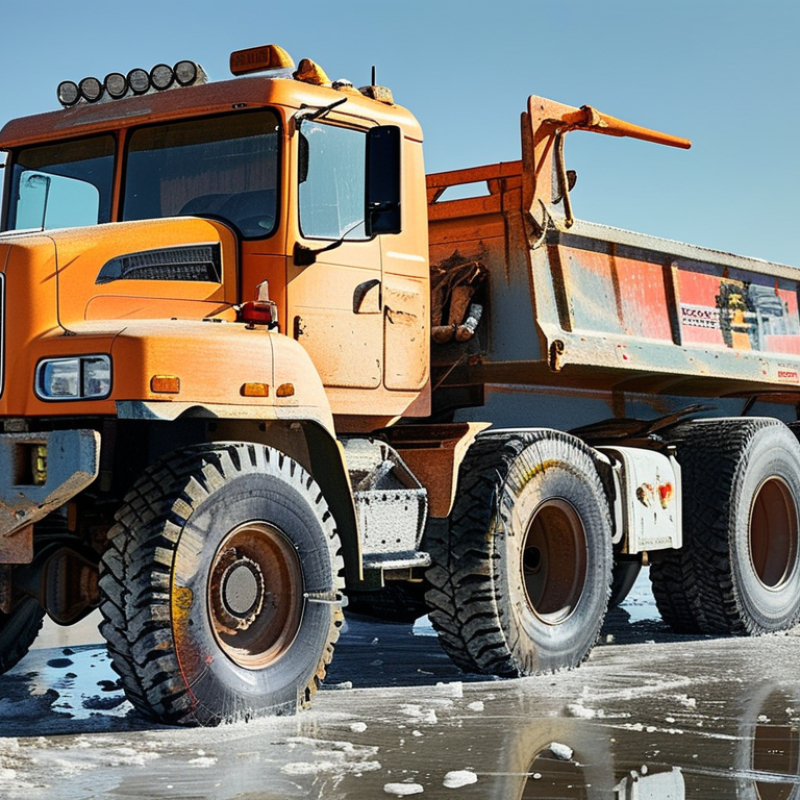
Define the duty before comparing hanger designs. Record the truck’s GVWR, front and rear GAWR, legal payload, tire size, and wheel offset. GVWR shows the maximum loaded vehicle weight. GAWR reveals the load each axle and its suspension must carry. Payload alone can mislead you.
Numbers matter. A 2023 Federal Highway Administration freight report states that trucks moved more than 12 billion tons of freight in 2022. That volume reflects demanding, repetitive service. The FHWA Highway Statistics 2022 report also lists more than four million public-road miles in the United States. Quarry access roads, broken pavement, and winter treatment create very different hanger loads.
Measure the loaded tire position, not only the empty chassis. A larger tire may reduce flap clearance during suspension movement. Heavy payloads can also change frame height and flap angle. Choose a hanger with suitable frame fit, corrosion resistance, and clearance around the tire and exhaust system. I would inspect the mounting area for elongated holes, cracked brackets, or packed gravel before selecting replacement hardware. That check is often skipped.
A field record helps. Write down axle weights from a certified scale, tire dimensions from the sidewall, and the percentage of paved versus rough-road operation. FMCSA’s 2022 Large Truck and Bus Crash Facts report recorded 5,837 large trucks involved in fatal crashes, reminding operators that small hardware decisions deserve careful maintenance. The report does not measure mud flap failures, so applying its data directly would be imperfect. That limitation deserves attention.
Choosing a dump truck mud flap hanger starts with measurements, not appearance. An experienced installer measures the frame width between the mounting faces with a steel tape. Record the narrowest point. Frames can taper near crossmembers, and that detail can change the hanger fit. Measure twice. Do not rely on a catalog dimension alone.
Next, measure the mounting hole spacing from center to center. Check both horizontal and vertical distances when the bracket uses multiple holes. Even a small mismatch can force the hanger into a stressed position. An adjustable hanger may solve this issue, but only when its range matches the frame accurately. I once assumed two holes were symmetrical without checking. That shortcut caused a poor alignment and wasted installation time.
Tire-to-flap clearance needs a practical inspection. With the truck parked on level ground, measure the gap from the tire’s widest surface to the flap’s intended edge. Check suspension movement, tire deflection, and nearby brackets. Leave enough space for mud, gravel, and snow to pass without constant rubbing. Check clearance at full steering lock where applicable. Also inspect the gap with the flap hanging naturally, not pulled tight by hand. Clearance is easy to underestimate. A slightly larger gap may protect the flap, while excessive distance can reduce splash control. Take photos and record every measurement before ordering replacement hardware.
| Measurement or Selection Factor | How to Measure | Typical Reference Range | Recommended Hanger Specification | Why It Matters | Fit-Check Result |
|---|---|---|---|---|---|
| Frame rail width | Measure the outside-to-outside distance across the frame rails at the proposed mounting location. | Approximately 30–36 in (762–914 mm) | Choose a crossbar or hanger assembly that covers the measured width without forcing the rails inward or outward. | A hanger that is too narrow may not reach both rails; one that is too wide may require unsupported extensions. | Pass when the hanger sits squarely on both rails and does not interfere with suspension or body components. |
| Frame rail thickness | Measure the thickness of the frame rail at the mounting point, including any reinforcement plate if the fastener passes through it. | Commonly about 0.25–0.50 in (6–13 mm) | Use clamp plates, brackets, and fasteners with enough thread engagement for the measured thickness. | Incorrect thickness information can lead to short fasteners, poor clamping, or damage to the frame. | Pass when the mounting hardware fully engages the nut or locking system without bottoming out. |
| Existing mounting-hole spacing | Measure from the center of one hole to the center of the next hole. Record both longitudinal and vertical spacing when applicable. | Common hole centers may be about 3–6 in (76–152 mm), but layouts vary by vehicle. | Select a hanger with matching hole centers, or use a purpose-built adapter plate rather than enlarging structural holes. | Matching hole spacing reduces installation stress and keeps the hanger aligned with the frame. | Pass when every required hole aligns without prying, slotting, or drilling the frame. |
| Fastener-hole diameter | Measure the existing hole diameter with a caliper or compare it with the original fastener specification. | Common heavy-duty mounting holes are often around 0.50–0.75 in (13–19 mm). | Use fasteners and hanger holes with matching nominal diameter and suitable load-rated hardware. | A loose or undersized fastener can allow movement, elongate the holes, and create noise or fatigue. | Pass when the fastener fits the hole correctly and the washer fully supports the connection surface. |
| Tire-to-flap clearance | Measure from the closest tire sidewall or tread edge to the intended inner face of the mud flap while the vehicle is at normal ride height. | Keep at least 2 in (50 mm) static clearance; more may be required for wide tires or severe articulation. | Position the hanger so the flap remains clear of the tire during steering, suspension travel, and loading conditions. | Insufficient clearance can cause rubbing, flap damage, tire damage, or loss of control of the flap. | Pass when the tire cannot contact the hanger, flap, brackets, or fasteners through the expected range of movement. |
| Mud flap width | Measure the available coverage area behind the tire and compare it with the flap width and hanger support width. | Typical heavy-truck flaps are approximately 24–30 in (610–762 mm) wide. | Choose a hanger that supports the full flap width and leaves no unsupported corner likely to curl into the tire. | Correct width improves spray control and reduces flap distortion in wind or road debris. | Pass when the flap covers the intended tire path without extending into nearby moving components. |
| Mud flap length | Measure from the hanger mounting line to the desired lower edge of the flap at normal ride height. | Common lengths are approximately 24–36 in (610–914 mm), depending on body height and local requirements. | Select a length that provides coverage while maintaining road and ground clearance through suspension movement. | A flap that is too long may drag, while one that is too short may provide inadequate spray protection. | Pass when the flap does not contact the road during normal operation or interfere with ramps and loading areas. |
| Lower-edge ground clearance | Measure from the bottom edge of the flap to the ground on level pavement with the truck unloaded and at normal ride height. | A practical starting target is about 6–12 in (152–305 mm), subject to vehicle configuration and applicable regulations. | Adjust the hanger height or flap length to avoid dragging while preserving effective spray coverage. | Ground clearance changes with payload, suspension movement, and operating terrain. | Pass when the flap remains clear of the ground during normal travel and expected suspension compression. |
| Hanger-to-body clearance | Measure the gap between the hanger and the dump body, frame-mounted equipment, lights, air lines, and other nearby components. | Maintain at least 1–2 in (25–50 mm) from fixed components; allow additional movement clearance for the dump body. | Use a straight or offset hanger according to the measured obstruction and body movement path. | The dump body may pivot or move relative to the frame, especially during raising and lowering. | Pass when no contact occurs with the body, hinges, hydraulic components, wiring, or lighting equipment. |
| Hanger material and section | Identify the operating environment, expected impact exposure, and available mounting support before choosing the section size. | Heavy-duty hangers commonly use steel tube, formed steel, or solid steel components. | Use a corrosion-protected, structurally supported hanger suitable for the flap size and operating conditions. | Material and section strength affect resistance to vibration, impact, bending, and corrosion. | Pass when the hanger remains rigid under normal vibration and does not permanently bend after installation. |
| Installation alignment | After loosely installing the hardware, check that the hanger is level, centered, and parallel to the axle or rear body line. | Alignment should be visually square; measurable twist should be corrected before final tightening. | Use spacers or a compatible bracket where necessary, without creating point loads on the frame. | Misalignment can make the flap hang unevenly and may move it closer to a tire or road surface. | Pass when the flap hangs vertically, the hanger is secure, and all clearances remain within the measured limits. |
| Final movement check | Turn the steering where applicable, inspect the suspension at full expected travel, and raise/lower the dump body if safe to do so. | Clearance must remain positive throughout the vehicle's normal operating movement. | Reposition or select a different hanger whenever any contact point appears during the movement check. | Static measurement alone may not reveal interference during articulation, loading, or body operation. | Pass only when the tire, flap, hanger, fasteners, and nearby components remain separated in every checked position. |
How to Choose Dump Truck Mud Flap Hangers?
Sizing the tube correctly starts with the actual mud flap load, not appearance. A 1-inch round tube usually handles twisting smoothly and sheds water, dirt, and road salt. Its curved surface also avoids sharp corners that can catch debris. However, it offers limited space for flat mounting plates. A 1¼-inch square tube provides a broader welding face and better resistance to bending in the loaded direction. That extra width matters when a long mud flap swings behind the truck.
The numbers reveal the difference. Using a 0.120-inch wall as a comparison, approximate elastic section modulus is about 0.065 in³ for a 1-inch round tube and 0.187 in³ for a 1¼-inch square tube. The square section therefore resists bending nearly three times better in this simplified calculation. Actual corner radii, wall tolerance, and mounting orientation will change the result. The AISC HSS Design Guide No. 24 recommends checking real section properties instead of relying on nominal dimensions. A common mistake is choosing square tubing only because it looks stronger.
Material quality also deserves attention. ASTM A500/A500M-23 lists a 50 ksi minimum yield strength for Grade C structural tubing. That value does not guarantee a durable hanger. Weld length, bolt spacing, vibration, and corrosion exposure still control service life. In field inspections, cracked weld toes often appear before the tube itself fails. I would measure the existing bracket first. Sometimes the “stronger” square tube cannot clear the dump body. Weight, clearance, and replacement access need equal consideration.
Material selection matters when a mud flap hanger faces salt, rain, gravel, and repeated vibration.
The AMPP IMPACT study estimated global corrosion costs at about $2.5 trillion annually, equal to 3.4% of global GDP. That figure explains why a small hanger deserves careful material selection.
Its passive surface resists moisture and road salt better than ordinary carbon steel. It suits coastal fleets, winter routes, and frequent washing.
However, chloride can attack scratches and tight crevices. Stainless steel is not maintenance-free.
ASTM coating guidance requires inspection of coating thickness and surface coverage, especially around edges and welds. It usually costs less and handles moderate exposure well.
Stone impacts may remove zinc, leaving exposed steel vulnerable. Check chipped areas early. That is where practice gets messy.
A thicker coating does not guarantee longer service if water remains trapped behind the hanger.
Choose 304 stainless for severe corrosion exposure, or zinc-coated steel for controlled environments and tighter budgets.
Inspect mounting holes, welds, and bends during every scheduled service. Data supports the choice, but route conditions decide it.
How to Choose Dump Truck Mud Flap Hangers?
Verify strength before comparing prices. SAE J429 lists minimum tensile strength near 120 ksi for Grade 5 fasteners. Grade 8 reaches about 150 ksi in common 1/4 to 1-inch sizes. That difference matters when a mud flap catches wind, gravel, or packed snow. During hanger inspections, I check the bolt, washer, bracket hole, and frame contact together. A stronger bolt cannot repair a thin, cracked hanger. It sounds obvious, but it is often missed.
CVSA’s 2024 International Roadcheck report recorded 48,761 Level I inspections. About 23.2% of inspected vehicles received an out-of-service violation. Brake defects led the vehicle violations at roughly 25.2%, while tire defects reached about 20.5%. These figures do not measure mud flap hangers directly. They show why small hardware deserves regular inspection. Loose fasteners can enlarge mounting holes, create vibration, and eventually detach the flap. I have seen clean-looking Grade 8 bolts installed with poor washers. The result was still disappointing.
Tips: Match Grade 5 or Grade 8 hardware with the hanger designer’s requirements. Use hardened washers and inspect torque after the first loaded route. Replace bolts showing stretched threads, deep rust, or damaged heads. Do not mix unknown fastener grades. A torque wrench helps, but it cannot reveal a bent frame tab. Photographing the hanger before and after service can expose gradual movement. Some choices remain uncertain, especially on heavily modified trucks; recheck them after real road use.
SAE J429 Grade 8 fasteners provide higher minimum tensile strength, yield strength, and proof load than Grade 5 fasteners. For mud flap hangers exposed to vibration, impact, and heavy-duty service, the higher-strength Grade 8 option offers a greater mechanical strength margin. Actual fastener selection should also consider diameter, joint design, installation torque, corrosion protection, and operating conditions.
: Start with the mud flap’s weight, length, and movement. A square tube resists bending better, but it may not clear the dump body. Looks can mislead.
Its curved surface sheds water, salt, and gravel more easily. It also has fewer corners where debris can collect.
The wider face supports stronger welds and flatter mounting plates. It can resist bending nearly three times better in a simplified comparison.
No. Check clearance, weight, welding space, and replacement access. A stronger tube is useless if it strikes the dump body.
Choose it for coastal routes, winter salt, frequent washing, or persistent moisture. Inspect scratches and tight crevices because corrosion can still begin there.
It suits moderate exposure and tighter budgets. Inspect chipped coating near bends, welds, and bolt holes.
Common medium-strength fasteners may handle normal service, while higher-strength types offer more tensile capacity. Match the fastener to the hanger design.
Check bolts, washers, holes, weld toes, bends, and frame contact. Look for rust, stretched threads, enlarged holes, and movement.
No. A strong bolt cannot repair cracked metal, thin brackets, or a bent frame tab. This mistake remains surprisingly common.
Photograph it before service, then inspect it after the first loaded route. Recheck torque and watch for fresh marks or shifting. I would still verify it again.
Choosing the right Dump Truck Mud Flap Hangers starts with understanding the vehicle’s working conditions. Record the gross vehicle weight rating, gross axle weight rating, payload, tire size, and typical road exposure, including mud, water, gravel, and vibration. Then measure the frame width, mounting-hole spacing, and clearance between the tires and mud flaps. Accurate measurements help prevent interference, uneven flap movement, and premature wear.
Next, select the hanger size and construction. Compare 1-inch round tubing with 1¼-inch square tubing according to the truck’s load, operating environment, and required rigidity. For material selection, 304 stainless steel offers strong corrosion resistance, while zinc-coated steel can provide practical protection and value when properly maintained. Finally, verify the strength of all mounting hardware. SAE J429 Grade 5 or Grade 8 fasteners should be evaluated based on the expected loads, vibration, and installation requirements. A complete assessment ensures secure, durable, and properly aligned mud flap support.
