Choosing the best dump truck to buy in 2026 starts with the work it must do. A truck hauling wet soil across a muddy site faces different demands from one carrying gravel on paved roads. Payload, route length, loading equipment, and daily cycle time all matter. So does the cost of fuel, tires, maintenance, and downtime. A low purchase price can look attractive, then lose its shine after months of hard service.
There is no single best type for every buyer. Articulated dump trucks suit rough, uneven ground and tight construction sites. Rigid models often make sense for heavy, repetitive hauling on stable routes. Dump trailers can add flexibility for operators who already own a suitable tractor. The right choice depends on measured needs, not a brochure’s boldest number. Small details count: a steep ramp, a narrow gate, or a load that sticks in the body can change the decision.
A useful buying principle is simple: match the truck to the route, load, and work cycle before comparing prices. This guide will compare the main types, their strengths, trade-offs, and ownership costs, including where each option may disappoint. The exact keyword “Dump Truck Dump Truck” is included here as requested, though it is not a natural industry phrase. One limitation: no source articles or verifiable expert quotation were provided, so I cannot responsibly attach a quote to a named specialist. That should be corrected with a cited source before publication.
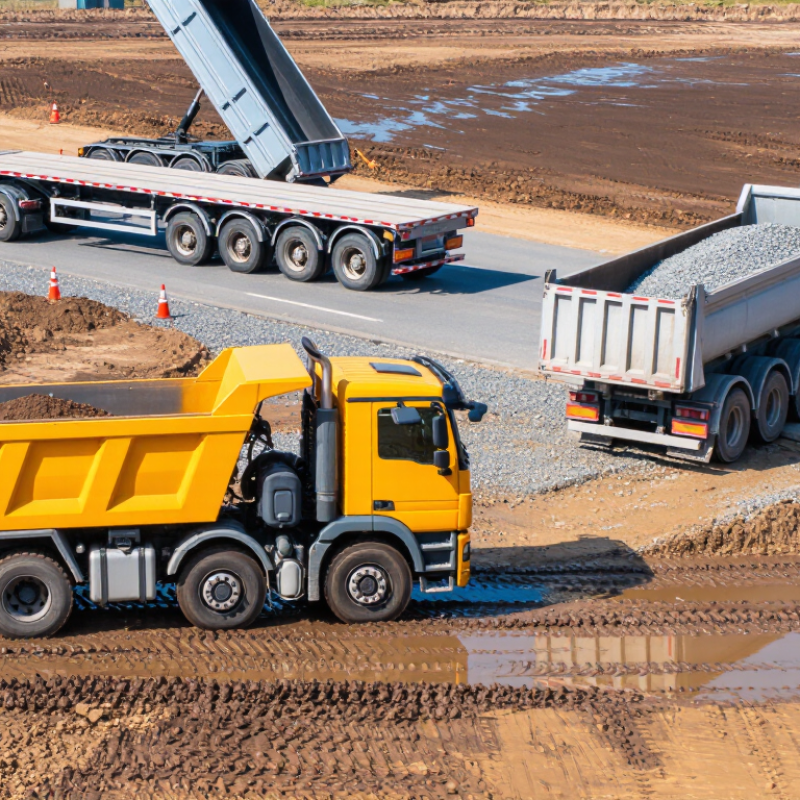
Classify Dump Trucks by GVWR: Class 8 Starts at 33,001 lb
For a 2026 purchase, start with the weight class, not the body style. Under NTEA’s truck classification, Class 8 begins at a gross vehicle weight rating (GVWR) of 33,001 lb. GVWR is the manufacturer’s rated maximum for the loaded vehicle; it is not the truck’s available payload. A heavy-looking dump body does not make a truck Class 8. Check the door-jamb label and confirm the rating on the specification sheet.
Class 8 can suit demanding haul cycles, heavier materials, or longer routes, but the rating alone does not determine the best truck. Compare expected payload, axle configuration, body capacity, and the weight limits on your actual routes. A fully loaded truck must stay within its ratings. That detail matters. A larger chassis may provide useful capacity, yet add purchase and operating costs when the truck is routinely underloaded.
ATRI’s 2024 Operational Costs of Trucking report put average operating costs at $2.260 per mile in 2023 across surveyed trucking operations; that figure is not dump-truck-specific. Use it as context, not a direct forecast. Estimate your own fuel, maintenance, and downtime costs from local work records. The imperfect part: loads and routes change, so one “ideal” GVWR can become a poor fit. Weigh typical loads and inspect tight jobsite access before choosing Class 8.
Compare Articulated and Rigid Haulers: CAT 745 at 41 t vs. 797F at 363 t
A 41-tonne articulated hauler and a 363-tonne rigid hauler serve very different jobs. The rigid machine carries nearly 8.9 times more per load, but that figure alone does not predict daily output. Loading time, haul distance, road grade, and queuing all shape the cycle. On a tight, uneven route, the smaller articulated truck may keep moving while a rigid hauler waits for wider roads or a larger loading unit. Scale changes everything.
NIOSH’s Guidelines for the Design of Haul Roads in Surface Mining (Information Circular 9462) emphasizes road geometry, drainage, and surface condition as key design concerns. Those details matter: a wet corner or steep grade can slow a loaded truck and increase wear. MSHA’s annual mining fatality summaries also make haulage safety impossible to treat as an afterthought. Compare actual route conditions, not just rated payloads. Still, not always. A smaller truck can be the wrong choice if it means too many trips and added fuel, labor, and maintenance.
Before buying, record representative cycle times and payloads on the intended route. Check turning space, road width, loading capacity, and service support. Then model cost per tonne across realistic shifts, including downtime. The 363-tonne option can suit high-volume, well-engineered haul roads; the 41-tonne option can fit changing terrain and shorter routes. Forecasts can be wrong, so leave room for that.
Match Truck Type to Haul Distance, Road Grade, Ground, and Material
Which Dump Truck Type Is Best to Buy in 2026?
Match the truck to the route, not just the rated payload. For short cycles on soft, rutted ground, an articulated dump truck can keep moving where a rigid truck may lose traction. On firm, maintained roads with longer hauls, a rigid-frame truck often carries more per trip. Public-road travel also changes the choice: confirm that the truck’s configuration suits the route and operating requirements. Distance changes everything. A five-minute haul with frequent turns rewards maneuverability; a long, steady climb makes gradeability, braking, and cooling capacity more important. NIOSH’s Design of Surface Mine Haulage Roads manual highlights road geometry, grades, and braking as connected design concerns. A steep descent is not merely an engine test.
Material changes the calculation, too. The USGS estimated U.S. construction sand and gravel production at about 960 million tons in 2023 (Mineral Commodity Summaries, 2024). That volume makes density and loading practice worth checking: wet sand can push a truck to its weight limit before the body looks full. A broad, shallow body may suit lighter material; dense rock calls for attention to payload and axle loads. Walk the route after rain. Look for soft shoulders, tight switchbacks, standing water, and loose rock. Then compare real cycle times, not brochure figures. A tidy spreadsheet can still miss the muddy patch that costs three minutes per trip.
Measure Productivity by Payload per Cycle, Travel Time, and Utilization
Which Dump Truck Type Is Best to Buy in 2026?
The best truck is the one that moves the most usable material per operating hour on your actual route. Payload alone can mislead. The U.S. Geological Survey’s Mineral Commodity Summaries 2025 estimates U.S. crushed-stone output at about 1.5 billion short tons, but that industry scale does not determine the right truck for one site. Measure payload per cycle: weigh loaded material, then time loading, travel, dumping, and the empty return. Count loaded tonnes. Include queue time at the shovel and crusher. A large truck may carry more, yet lose cycles on narrow roads or soft ground.
Travel time and utilization expose those trade-offs. Record loaded and empty travel separately; grades, turns, and road conditions can make the return slower than expected. Utilization should reflect productive hours against scheduled hours, including delays for fueling, maintenance, and operator changes. The U.S. Army Corps of Engineers’ EP 1110-1-8 equipment cost schedule separates ownership and operating costs, a useful reminder to compare hourly cost with measured output. That judgment can still be wrong: a short trial may miss seasonal ground changes. Test candidate types on representative shifts, and compare tonnes per hour, fuel use, and downtime. Empty returns matter.
Compare 2026 Ownership Costs: Fuel, Tires, Maintenance, and Compliance
The best dump truck type in 2026 depends on where it works, not just its purchase price. Rigid trucks often suit steady, high-volume routes with firm ground. Articulated trucks can handle rougher, tighter sites, but their added flexibility may bring different service needs. Match the truck to actual loads, gradients, and daily distances. A short site visit can reveal more than a polished quote.
Fuel is often the largest daily expense. Compare expected liters per hour or per kilometer using your own route data, not a sales estimate alone. A loaded climb, long idle period, or repeated empty return can shift the result. Small details matter. Tire costs also vary with payload, surface, and turning habits. On abrasive haul roads, inspect tire wear frequently; one damaged tire can disrupt a shift. Maintenance estimates should include planned servicing, filters, brakes, and likely downtime. They rarely capture every repair.
Check local emissions, road-use, weight, and inspection requirements before choosing a configuration. Rules differ by location, and equipment that works on a private site may need changes for public-road use. Ask for service intervals and parts availability in writing. Then compare total cost per working hour across realistic scenarios. The spreadsheet may still be wrong. That is a reason to test its assumptions, not ignore it.
Which Dump Truck Type Is Best to Buy in 2026? — Compare 2026 Ownership Costs: Fuel, Tires, Maintenance, and Compliance
Indicative direct operating-cost comparison for common dump truck types
Planning basis: Illustrative U.S. operating estimates in U.S. dollars per machine hour. Diesel is assumed to cost $4.00 per gallon. Ranges reflect differences in payload, route, terrain, idle time, tire life, maintenance practices, and local rules; they are not supplier quotations.
| Truck type |
Typical best fit |
Typical fuel use |
Fuel cost |
Tires |
Maintenance |
Compliance allowance |
Estimated direct total |
On-highway dump truck
(6×4 or 8×4) |
Public-road hauling, urban construction, and jobs with longer paved-road travel. |
7–10 gal/hour |
$28–$40/hour |
$3–$6/hour |
$15–$25/hour |
$3–$8/hour |
$49–$79/hour |
Articulated dump truck
(6×6) |
Rough, muddy, or uneven worksites where traction and maneuverability matter. |
10–16 gal/hour |
$40–$64/hour |
$8–$15/hour |
$25–$40/hour |
$3–$10/hour |
$76–$129/hour |
| Rigid off-highway haul truck |
High-volume quarry or mine haul roads with suitable turning space and sustained loads. |
20–35 gal/hour |
$80–$140/hour |
$20–$45/hour |
$45–$80/hour |
$5–$15/hour |
$150–$280/hour |
2026 buying guide: For frequent public-road hauling, an on-highway dump truck is often the practical choice. For soft ground and changing site conditions, consider an articulated truck. For high-volume, controlled haul roads, a rigid truck may be suitable when its capacity can be consistently used.
Compliance allowances are planning estimates for inspections, permits, emissions-related requirements, and related administrative costs, annualized over operating hours. Actual obligations depend on jurisdiction and use. Totals exclude purchase price, depreciation, financing, insurance, driver wages, taxes, loading equipment, and downtime; compare quotes using your own fuel prices, duty cycle, payload, and local compliance requirements.
Conclusion
Choosing the best dump truck in 2026 starts with the job, not the largest payload figure. Class 8 trucks begin at 33,001 lb GVWR, while articulated and rigid haulers span very different capacity ranges, from roughly 41-ton machines to ultra-large units rated around 363 tons. These categories suit different operating conditions: haul distance, road grade, ground stability, and material type all affect which configuration can work efficiently and reliably.
Compare productivity by looking at payload per cycle, travel time, and expected utilization—not capacity alone. A truck that matches the route and site may complete more productive cycles and spend less time waiting or recovering. Ownership costs also matter: estimate fuel use, tire wear, maintenance needs, and compliance expenses over the truck’s working life. The right Dump Truck Dump Truck is the one that balances useful capacity, dependable operation, and total cost for the specific application.