
Choosing the best Waste Disposal Truck for sale in China requires more than comparing prices and polished photographs. Fleet owners must examine payload, compaction performance, body materials, hydraulic systems, fuel consumption, and maintenance access. A truck may look impressive online, yet its real value appears during daily collection routes, narrow streets, wet waste loading, and repeated unloading cycles.
This guide introduces practical methods for evaluating Chinese manufacturers and suppliers. It considers factory experience, production quality, export records, customization support, and after-sales service. Reliable suppliers should provide clear specifications, inspection documents, warranty terms, and responsive technical assistance. They should also explain how the truck handles local waste volumes, climate conditions, road surfaces, and operating schedules.
Details matter.
A strong comparison should include bin-lifting speed, leakage prevention, noise control, safety features, and spare-parts availability. Buyers should request videos, test reports, and references from comparable fleets when possible. However, no single model is perfect for every city or budget. Some affordable trucks may require stronger quality checks or better operator training. That is not a reason to reject them, but it deserves honest consideration.
The following overview will help readers identify suitable Waste Disposal Truck options in China. It focuses on usable evidence rather than exaggerated claims. With careful inspection and realistic planning, buyers can reduce operating risks and select equipment that supports cleaner, more dependable waste collection.
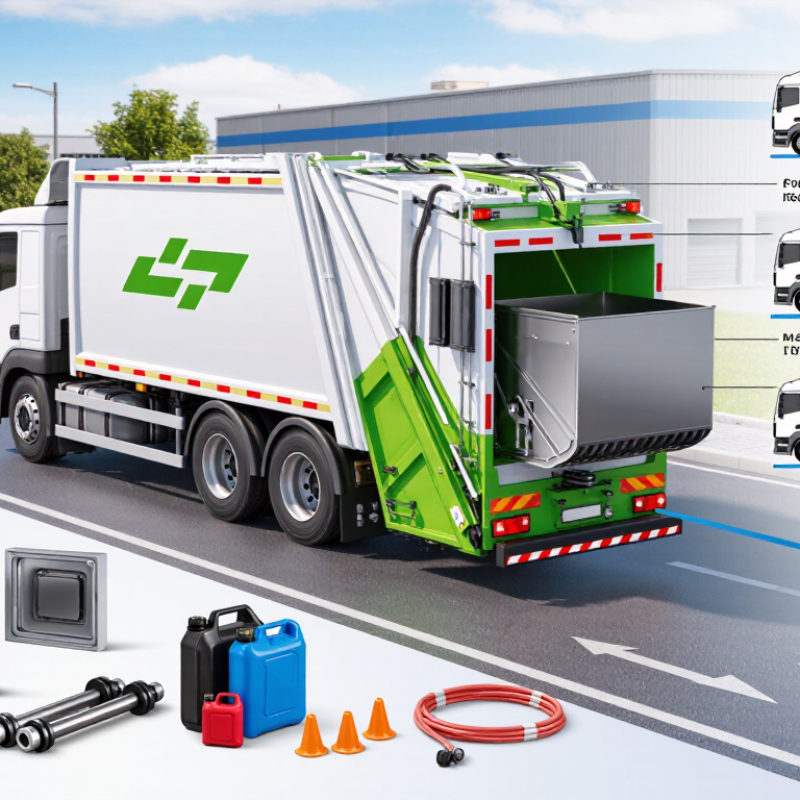
The best waste disposal truck from China is not simply the largest or cheapest option. It should match your waste volume, road conditions, loading method, and service capacity. A practical truck needs a suitable payload, strong body structure, reliable hydraulics, and controlled compaction. Check the steel thickness, weld quality, drainage points, and door seals. Small details prevent costly leaks and unpleasant odors.
During a real inspection, run several loading and unloading cycles. Watch for uneven movement, hydraulic noise, oil leakage, and slow response. Ask for maintenance records, production inspection reports, and payload test results. A trustworthy supplier should explain component specifications clearly, not hide behind attractive photos. Check the chassis dimensions carefully. A truck that looks powerful may struggle on narrow collection routes. That mistake happens more often than expected.
Tips: Compare the truck with your daily collection data before ordering. Request videos of the actual unit, not only catalog images. Inspect paint coverage inside the container, especially around corners and welds. Confirm spare-part availability and technician support in writing. Leave room for doubt. Even a well-built truck can need adjustments after arrival, such as hydraulic timing or container alignment. A careful pre-delivery inspection usually saves more money than a small discount.
China Best Waste Disposal Truck for Sale?
Main Types of Chinese Waste Disposal Trucks
Chinese waste disposal trucks serve different collection routes, waste volumes, and working conditions. Rear loader trucks suit urban streets with shared bins. Their hydraulic lifters reduce manual handling and support regular municipal collection. Side loader trucks work well on wide roads and planned routes. One operator can often control the loading arm from the cab. Narrow alleys can be difficult.
Front loader trucks handle large commercial containers. They need enough clearance above the bin and a stable turning area. Compactor trucks compress waste inside a sealed body. This increases payload efficiency and helps reduce scattered rubbish during transport. However, compaction systems require careful maintenance. Small hydraulic leaks can become expensive problems.
Hook-lift and detachable-container trucks offer flexible service for construction waste, bulky refuse, and temporary sites. They are useful when containers must be exchanged quickly. Their value depends on container compatibility and lifting capacity. Buyers should check axle ratings, body volume, hydraulic pressure, and corrosion protection. Ask for real load tests, not only catalog figures.
I would not select a truck by volume alone. A larger body may overload local roads or waste time in narrow districts. Inspect welds, seals, control valves, warning lights, and drainage points. Request maintenance records and operator training materials. Some specifications look excellent on paper, yet daily access conditions tell a different story.
China Best Waste Disposal Truck for Sale?
Comparing waste disposal trucks requires more than checking body size or purchase price. Start with payload, body volume, and gross vehicle weight. A 12-cubic-meter body may look productive, but overloaded routes increase tire wear and braking distance. Check the usable payload after accounting for the hydraulic system and container weight. Wheelbase also matters. A shorter chassis can turn more easily in crowded streets.
Examine the loading mechanism, compaction ratio, and hydraulic cycle time. A reliable truck should complete repeated cycles without overheating or leaking. Inspect body seams, drain channels, and rear-door seals carefully. Small gaps can release liquid during collection. Galvanized or corrosion-resistant materials may improve service life, especially in wet operating areas. Engine output, fuel consumption, axle capacity, and ground clearance should match route conditions. Bigger is not always better. I have seen inefficient trucks waste time on narrow collection roads. That lesson is easy to overlook.
Tips: Ask for a full-load demonstration before buying. Measure loading height and turning radius at your actual sites. Review maintenance access, spare-part availability, warranty terms, and operator training. Confirm the truck’s dimensions and safety equipment against local requirements. A quiet hydraulic pump is useful, but it does not prove long-term reliability. Request service records and inspect a working unit. Be cautious with impressive specifications that lack test conditions.
China Best Waste Disposal Truck for Sale?
How to Choose the Right Truck for Your Waste Management Needs
Choosing a waste disposal truck starts with the route, not the advertised price. Measure alley widths, collection points, daily waste volume, and average travel distance. A narrow residential route may need a compact truck with strong maneuverability. Large commercial sites may require higher payload capacity and a larger loading body.
Match the body volume to actual waste density. Food waste is heavy, while packaging waste occupies more space. Overloading can increase tire wear, braking distance, and maintenance costs. Ask for verified payload data, hydraulic cycle times, fuel consumption, and body material specifications. Supplier figures may change under real working conditions. Small errors matter.
Inspect the compaction system, rear loading height, drainage design, and operator controls. Workers should reach controls safely without climbing onto unstable surfaces. Check axle ratings and suspension performance for uneven roads. Request service records, parts availability, warranty terms, and inspection documents before payment. A practical test should include a full route, repeated loading, and unloading at the actual facility. Do not rely only on photographs. China-built trucks can offer useful configurations, but quality may vary between production batches. Leave room for independent inspection and honest questions.
Typical payload capacities vary by truck configuration. Use this comparison to match the vehicle type with collection volume, route conditions, and waste density.
The figures show representative industry payload capacities in metric tonnes. Actual capacity depends on body size, compaction ratio, chassis configuration, and local road-weight regulations.
Buying a Chinese waste disposal truck starts with workload, not a low advertised price. Match body volume to daily tonnage, route length, and waste type. A compact truck may suit narrow streets, while a larger body can overload weak collection points. Ask for payload data, hydraulic diagrams, service records, and parts availability. Check the chassis age and engine hours separately. I would not trust a clean repaint alone. Request a cold-start video and a loaded operation test. Confirm dimensions before the truck reaches your depot.
Tips: Bring an independent mechanic during inspection. Examine welds around the hopper, cracks near hinges, leaks beneath cylinders, and uneven tire wear. Operate the compactor slowly, then under normal load. Listen for pump whine, frame movement, and delayed stopping. Test lights, warning alarms, camera systems, and emergency controls. Verify the serial plate matches the documents. A small mismatch can create expensive delays.
Maintenance should follow hours and conditions, not memory. Grease pivots regularly, inspect hydraulic hoses weekly, and clean residue from seals after each shift. Change filters at recommended intervals, using fluids suited to the operating temperature. Keep a simple log with dates, faults, photographs, and replaced parts. Train drivers to report unusual vibration immediately. Small details matter. Still, an inspection checklist cannot replace a certified technician’s assessment. Leave room for error, especially when translation or unfamiliar controls causes confusion. Reserve common seals, filters, and fasteners before the first busy season.
Measure route width, collection points, daily tonnage, and travel distance. Narrow alleys need compact trucks. Large sites need higher payload capacity.
Food waste is heavy, while packaging waste takes more space. Match body volume to actual waste density. More space is not always safer.
Ask for verified payload data, hydraulic cycle times, fuel consumption, body materials, service records, warranty terms, and parts availability.
Inspect welds, hinges, hydraulic cylinders, tires, lights, alarms, cameras, and emergency controls. Check for cracks, leaks, and uneven wear.
Yes. Test a cold start, repeated loading, a full route, and unloading at the real facility. Photos are not enough.
Operate it slowly, then under normal load. Listen for pump noise, frame movement, delayed stopping, or unusual vibration.
Grease pivots regularly and inspect hydraulic hoses weekly. Clean residue from seals after each shift. Replace filters at recommended intervals.
Reserve common seals, filters, fasteners, and suitable fluids before the busy season. A small parts stock can prevent long delays.
No. A checklist catches visible problems, but it cannot replace professional assessment. Translation and unfamiliar controls may still cause confusion.
Confirm dimensions, axle ratings, chassis age, engine hours, inspection documents, and serial numbers. A small mismatch can become expensive.
Choosing the best Waste Disposal Truck from China requires more than comparing prices. Buyers should evaluate build quality, payload capacity, compaction efficiency, fuel consumption, hydraulic performance, safety systems, and after-sales support. Chinese waste disposal trucks are available in several forms, including rear-loading, side-loading, front-loading, hook-lift, skip-loader, and specialized sewage or transfer trucks. Each type serves different collection and transportation tasks, so the ideal choice depends on waste volume, road conditions, collection methods, and local operating requirements.
Before purchasing, compare key specifications such as body capacity, compression ratio, lifting mechanism, chassis performance, dimensions, and maintenance accessibility. Request complete technical documents, inspect the truck and hydraulic components, verify manufacturing quality, and conduct functional tests before delivery. A reliable supplier should also provide spare parts, operator training, warranty terms, and maintenance guidance. With careful evaluation and regular servicing, a properly selected Waste Disposal Truck can improve collection efficiency, reduce operating costs, and support cleaner, more organized waste management operations.
